
Rubber Sheet Types and Applications
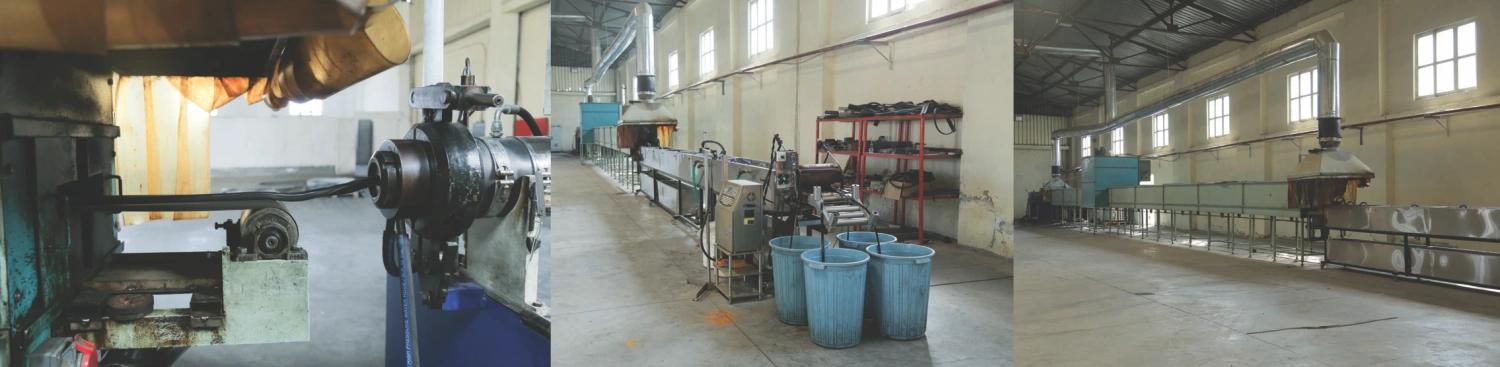
Rubber sheet is one of the most versatile rubber products, used in almost every branch of industry. It is produced as a flat sheet and cut to the required size for use as a gasket, floor covering, wear protection or insulation. NUR KAUÇUK MMC produces rubber sheets in various thicknesses and hardness grades.
Rubber sheet types
Smooth sheet
The most common type. Suitable for cutting gaskets, bench protection and general sealing work. The surface is smooth and provides good cushioning.
Patterned (textured) sheet
Used on floors that need an anti-slip surface. Produced with diamond, button or stripe patterns, it is widely applied in industrial areas and transport.
Reinforced (fabric-inserted) sheet
Strengthened with a woven layer inside. It does not change shape under high pressure and tension, so it is used in flange gaskets and conveyor belts.
Material selection
The application determines the material of the sheet:
- EPDM — resistant to water, steam and outdoor conditions.
- NBR — resistant to oil, oil products and fuel.
- SBR — used as a general-purpose, economical wear lining.
- Neoprene — copes well with weather, chemicals and moderate temperatures.
When deciding which material to choose, our articles what is EPDM rubber and NBR oil-resistant rubber will be useful. Sheet hardness is measured on the Shore hardness scale.
Thickness and size
Rubber sheets are usually produced in thicknesses from 1 mm to 50 mm. Thin sheets suit gaskets, while thick sheets suit vibration damping and impact protection. Temperature resistance ranges from -40 °C to +120 °C depending on the material.
Applications
Rubber sheets are used in machinery, the food industry, construction, shipbuilding and energy. They act both as a gasket material and as a protective lining. Our production capabilities allow us to make sheets in custom sizes and specifications.
To choose the right rubber sheet type for your project, browse the products section or contact us.