
Polyurethane vs Rubber: Differences and When to Choose Which
A frequently asked question when selecting industrial components is: polyurethane or rubber? Both materials are flexible and durable, but their properties and optimal application areas differ significantly. The right choice can sometimes extend a component's service life several times over.
What is the main difference?
Rubber (rubber-based elastomers) stands out for its high elasticity, recovery and good sealing ability. Polyurethane (PU), on the other hand, is a harder, mechanically stronger material and exhibits exceptional resistance to abrasion in particular. Simply put: rubber sits more on the "soft and elastic" side, while polyurethane is on the "hard and durable" side.
Abrasion resistance: polyurethane's strong point
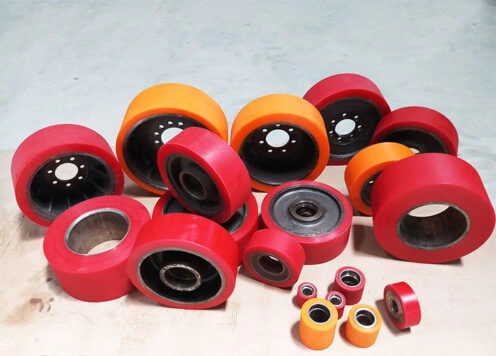
Polyurethane's greatest advantage is its outstanding abrasion resistance. Under the same conditions, a polyurethane component can serve many times longer than ordinary rubber. For this reason, polyurethane has the edge in parts operating under friction, pressure and mechanical load:
- Industrial wheels and rollers;
- Conveyor components and scrapers;
- Cushioning blocks operating under high load;
- Abrasion-resistant linings for mining and heavy industry.
Areas where rubber is superior
That said, polyurethane does not always mean the better choice. Rubber remains superior in a number of areas:
- Sealing (leak-tightness): for seals and O-rings, rubber's softness and recovery are more advantageous;
- High temperature: most polyurethanes weaken above 80–90 °C, whereas rubbers such as silicone or EPDM withstand higher temperatures;
- Chemical and water environments: some polyurethanes can break down in hot water and humidity as a result of hydrolysis;
- Cost-effectiveness: in mass-produced, simple applications, rubber is often more economical.
When to choose which?
The short rule is: if abrasion and mechanical load are the priority — polyurethane; if sealing, elasticity or high temperature is the priority — rubber. To correctly determine the hardness level, the Shore hardness scale is used for both materials, which helps to make the choice more concrete.
The NUR KAUÇUK approach
NUR KAUÇUK LLC produces both polyurethane and various rubber-based products. This makes it possible to objectively recommend the most suitable material for your application. You can explore the available range through our catalog.
Ultimately, there is no such thing as a "better material" — there is only the material that is more suitable for your application. For the right choice, the working conditions, load and temperature must be evaluated together.
Let's determine together which material suits you. Review our products and contact us for professional advice.